
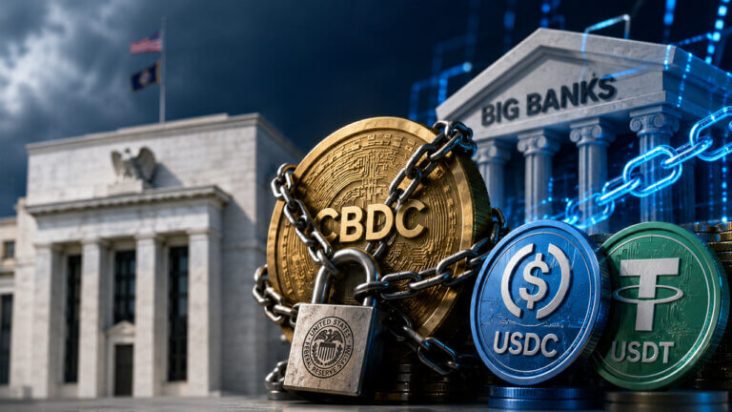
The fight over the future of digital money is entering a new phase as U.S. lawmakers move closer to blocking the creation of a Federal Reserve-issued Central Bank Digital Currency (CBDC).
Recent legislation advancing through Congress includes provisions that would prevent the Federal Reserve from launching a digital dollar for several years. Supporters argue that a CBDC could give governments excessive visibility into financial transactions and potentially threaten individual privacy. Critics have also raised concerns that a government-issued digital currency could compete directly with private-sector financial innovation.

However, even if Congress succeeds in blocking a CBDC, the broader transformation of money is unlikely to stop. Stablecoins, tokenized bank deposits, and blockchain-based payment networks are rapidly gaining traction as alternatives to traditional financial infrastructure. Many industry observers believe the debate is shifting from whether money will become digital to who will control the systems that power it.
The crypto industry has largely welcomed efforts to limit a government-backed digital dollar, viewing the move as supportive of decentralized assets and privately issued stablecoins. Companies operating in the digital asset sector argue that innovation should come from competitive markets rather than centralized government platforms.
At the same time, proponents of CBDCs argue that digital sovereign currencies could improve payment efficiency, expand financial inclusion, and help countries remain competitive in an increasingly digital global economy. Around the world, numerous governments and central banks continue to explore or test CBDC initiatives despite growing political resistance in the United States.
The outcome of the CBDC debate could have far-reaching implications for privacy, banking, payments, and the role of governments in the digital economy. Whether the future belongs to central bank digital currencies, stablecoins, or decentralized cryptocurrencies, one thing is clear: the global competition to define the next generation of money has only just begun.